The Complete Guide to 3PL Cold Storage for Scaling Food Brands

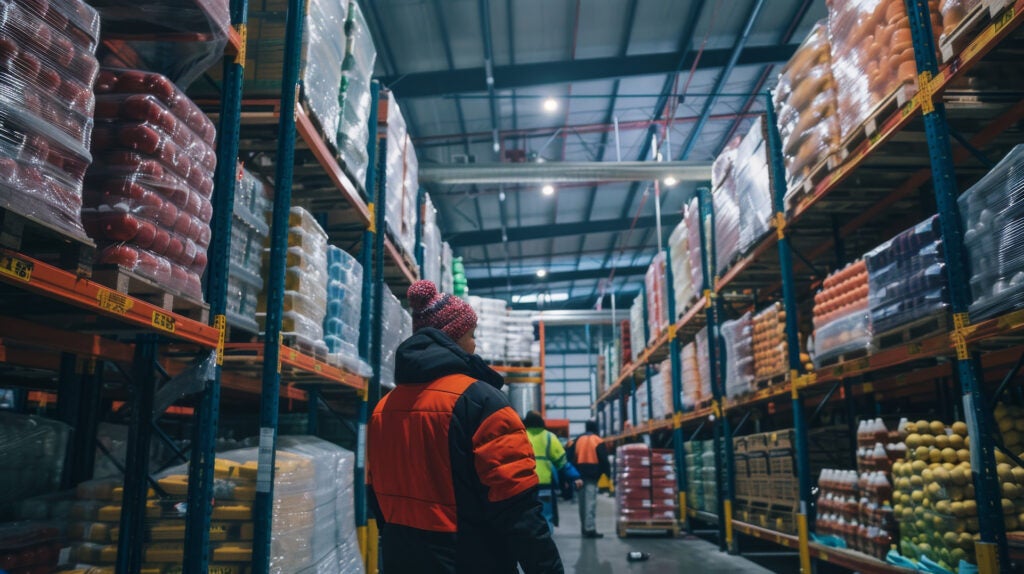
Cold storage warehouse. Food distribution center. Cold storage facility for food.


Evaluating 3PL Cold Storage Partners for Cold Food Distribution

Food is not just freight. Moving an engine block or a pallet of electronics across the country requires logistical coordination, but moving fresh produce, dairy, and temperature-sensitive goods requires something far more rigorous. It requires an unbroken chain of care, precision, and trust. Every handoff, every mile, and every hour spent in a refrigerated warehouse directly impacts the quality of the food that eventually reaches a family’s table, a student’s lunch tray, or a restaurant’s dining room.

Evaluating and choosing a 3PL cold storage and refrigerated warehouse partner is one of the most critical decisions a business can make. The United States cold storage network is vast, complex, and filled with moving parts. For local agricultural producers, multi-unit restaurant chains, schools, and government agencies, finding a logistics provider that understands the fundamental realities of cold food distribution is essential.

You do not just need a vendor; you need a partner who shares an in-this-together mentality. At Foster, we believe in a straightforward philosophy: People. Food. Together. From the first mile to the last, we’ve got the middle. Drawing on over 120 years of heritage in the food supply chain, we have built a one-stop refrigerated supply chain solution designed to give growers, foodservice operators, and institutions complete confidence in their distribution network.

The Realities of Cold Food Distribution Today

The modern food supply chain is highly demanding. Fresh produce delivery, dairy distribution, and the movement of specialty foods require an environment where temperature control is absolute and inventory management is precise. When a multi-unit fast-casual restaurant chain places an order, or a regional school district relies on weekly deliveries, there is no margin for error. Delays, temperature fluctuations, and cross-contamination are not just logistical hiccups—they result in wasted product, lost revenue, and compromised safety.

A third-party logistics provider (3PL) in the cold chain sector must do more than just store pallets and load trucks. They must actively manage the integrity of the product. The United States cold storage landscape has evolved from simple icehouses to highly sophisticated, data-driven facilities. However, technology alone is not enough. The best logistics solutions combine state-of-the-art infrastructure with deep industry expertise and a commitment to the people behind the food.

For businesses navigating this landscape, the evaluation process should center on integration, capability, and transparency. You must look at how a potential 3PL handles every stage of the journey—from warehouse management and commodity mapping to refrigerated freight and final delivery.

Moving Beyond Vendors: The Power of Vertically Integrated Logistics

Historically, many businesses have had to piece together their cold food distribution networks. We do not work for, we work with. That partnership mentality is why a vertically integrated approach fundamentally changes the reliability of your supply chain. By bringing distribution, freight, cold storage, and supply chain solutions under one roof, you eliminate the blind spots and operational friction that plague traditional logistics models.

Foster360: A Unified Supply Chain Solution

When you evaluate a 3PL, consider how seamlessly their services connect. Foster360 is our comprehensive approach to the food supply chain. It encompasses warehouse management, freight optimization, detailed inventory management, and commodity mapping. Because these services are unified, data flows smoothly from the moment fresh produce arrives at the loading dock until it is delivered to its final destination.

This vertical integration allows for end-to-end visibility. If there is a shift in a restaurant chain’s promotional schedule requiring an immediate surge in dairy distribution across the Carolinas, a vertically integrated partner can instantly adjust warehouse picking schedules and align refrigerated freight carriers to meet the demand. There is no waiting on three different companies to communicate; the solution is executed under one roof.

Inside the Modern Refrigerated Warehouse

At the heart of any cold chain operation is the physical storage facility. When touring or vetting a refrigerated warehouse, it is vital to look past the square footage and examine the operational precision within the walls. A high-quality cold storage facility is a dynamic environment designed to protect temperature-sensitive goods while moving them efficiently.

Temperature-Controlled and Climate-Controlled Zones

Not all food requires the same environment. Fresh produce distribution demands different humidity and temperature levels than frozen foods or ambient products. An advanced refrigerated warehouse features strictly partitioned temperature zones. This ensures that delicate leafy greens remain crisp, dairy products stay safely chilled without freezing, and frozen goods maintain their solid state.

During your evaluation, ask potential 3PL partners about their climate-monitoring protocols. Do they rely on manual checks, or do they utilize real-time sensors that alert warehouse staff to minute temperature fluctuations? A dedicated logistics provider will have redundancy built into their refrigeration systems, ensuring that even in the event of a power anomaly, the cold chain remains entirely unbroken.

Inventory Management and Order Fulfillment

Storing the food is only half the battle; knowing exactly where it is and how quickly it can be mobilized is the other. Effective cold storage warehousing relies on robust inventory management systems. Because food has a strict shelf life, operations must adhere strictly to First-In, First-Out (FIFO) or First-Expired, First-Out (FEFO) principles.

In a fast-paced environment serving independent kitchens, large-scale institutions, and supply chain partners, order fulfillment must be flawlessly executed. This involves strategic racking, careful palletizing to prevent crushing or cross-contamination, and efficient cross-docking capabilities. Cross-docking allows incoming fresh goods to be moved directly from inbound trucks to outbound delivery vehicles with minimal to no storage time, drastically reducing the transit time for highly perishable items.

Connecting the Dots: Refrigerated Freight and Transportation

Even the most advanced cold storage facility is rendered ineffective if the transportation network cannot maintain the same standard of care. Cold food distribution requires a specialized fleet and highly trained professionals behind the wheel. When choosing a supply chain partner, their freight capabilities should carry as much weight as their warehousing infrastructure.

Foster Freight: Reliable Delivery Nationwide

Transportation in the cold chain is about maintaining the environment established in the warehouse while moving at highway speeds. FosterFreight operates as a dedicated refrigerated freight carrier, offering full visibility and reliable delivery nationwide, with particularly deep regional expertise in the Southeast—including North Carolina, South Carolina, Virginia, Tennessee, and Georgia.

Evaluating a freight partner means looking at the equipment they use. State-of-the-art refrigerated containers (reefers) must be equipped with continuous temperature monitoring systems that feed data back to the central logistics hub. If a load of fresh produce is in transit from a local agricultural producer in North Carolina to a distribution center in Virginia, the temperature must be visible and verified in real-time.

The Backbone of the Supply Chain: CDL-A Drivers

You cannot separate the quality of the freight service from the people doing the driving. We know that to feed more than your drive to go further, you have to invest in the people on the road. The most reliable refrigerated freight operations are built on the backs of respected, well-supported CDL-A drivers.

When a 3PL treats its drivers with respect—offering dedicated long-haul routes, no-touch freight options, and a supportive culture—turnover drops and reliability skyrockets. Drivers who know they are valued take ownership of their loads. They understand that they are not just hauling cargo; they are delivering food that communities rely on. When you evaluate a logistics provider, look closely at their fleet and driver retention. A company that takes care of its drivers is a company that will take care of your freight.

High-Tech Meets High-Touch: The Partnership Model

The logistics industry is often obsessed with automation, sometimes at the expense of human connection. While data-driven technology is absolutely essential for modern supply chain solutions, it should never replace a real conversation when a complex problem arises. The ideal 3PL partner offers a customizable model: we’re as high-tech or high-touch as you want to be.

The Human Element

However, high-tech tools are most effective when backed by high-touch service. When supply chain disruptions occur—whether due to severe weather in the Carolinas or unexpected market shifts—an app cannot solve the problem on its own. You need an operational partner who picks up the phone, understands your specific business challenges, and works directly with you to reroute freight or adjust storage strategies. Plainspoken, honest communication is the foundation of a resilient food supply chain.

Deep Roots and Regional Expertise

The United States cold storage landscape varies wildly by region. Logistics operations that work perfectly in the arid Southwest may struggle with the humidity and specific infrastructural challenges of the Southeast. When evaluating a 3PL, regional expertise matters deeply.

With over 120 years of heritage in the food supply chain, our roots in the Southeast are deep. Navigating food distribution in the Carolinas, Virginia, Tennessee, and Georgia requires an intimate understanding of the region’s agricultural rhythms, highway networks, and local regulatory environments.

Local and regional agricultural producers rely on partners who understand harvest schedules and local market demands. By partnering with a 3PL that possesses concentrated regional expertise alongside nationwide freight capabilities, businesses benefit from localized knowledge backed by vast logistical resources. This ensures that whether you are moving fresh produce within a single state or distributing specialized dairy products across multiple borders, the operation is handled with maximum efficiency.

Compliance, Safety, and Food Integrity

There is no room for compromise when it comes to food safety. The regulatory landscape governing cold food distribution is stringent, and rightly so. Your 3PL partner must not only meet these standards but exceed them.

When evaluating a refrigerated warehouse, inquire about their specific protocols for preventing cross-contamination. This is particularly critical in facilities that handle both raw agricultural products and ready-to-eat foods. Strict zoning, dedicated handling equipment, and rigorous sanitation schedules are mandatory.

Furthermore, value-added services such as blast freezing and specialized temperature-sensitive handling demonstrate a high level of operational maturity. A true logistics partner actively protects your brand by ensuring that every pallet leaving their facility complies perfectly with food safety modernization acts and local health regulations. They take on the burden of compliance so that restaurant owners, school administrators, and farmers can focus on their core operations.

A Foundation Built on Community Impact

Ultimately, the food supply chain is about people. It is about the local farmers who grow the food, the drivers who move it, the kitchen staff who prepare it, and the families who eat it. When you choose a supply chain partner, you are also choosing a corporate citizen.

We believe that a successful logistics operation has a fundamental responsibility to the neighborhoods it serves. An efficient supply chain inherently reduces food waste—getting perishable goods to market before they spoil. But true community investment goes further.

A partner with a genuine community-first mindset looks for ways to give back actively. Whether through weekly food donations, building prepackaged food boxes for local nonprofits, or partnering with regional churches and food banks, logistics companies are uniquely positioned to fight food insecurity. When warehouses, freight partners, and distributors work together, they can redirect safe, surplus food directly to the people who need it most.

Choosing a partner with deep community investments means that your supply chain is contributing to the well-being of the region. It reinforces the simple truth that business operations do not exist in a vacuum; they exist within communities.

Making the Right Choice for Your Supply Chain

Evaluating and selecting a 3PL cold storage and refrigerated warehouse partner requires careful consideration of multiple moving parts. It is not enough to simply find a facility with open floor space or a carrier with an available truck. You need a comprehensive, one-stop refrigerated supply chain solution.

As you navigate the United States cold storage network, look for a partner that offers the stability of vertical integration. Look for advanced technology like real-time tracking and automated temperature controls, but insist on the high-touch, human communication that builds lasting trust. Demand excellence in both warehousing and refrigerated freight, and pay attention to how a company treats its CDL-A drivers—because those drivers hold the integrity of your product in their hands.

Above all, choose a partner who understands the profound responsibility of moving food. From the first mile to the last, the middle of the supply chain requires hard work, honesty, and an unwavering commitment to quality. By aligning your business with a logistics provider grounded in community and backed by a century of heritage, you ensure that your products arrive safely, efficiently, and ready to nourish the people who rely on them.

Contact us today to learn more about our cold storage and food distribution solutions.rowth.
The Role of 3PL Cold Storage in Scaling Food Brands

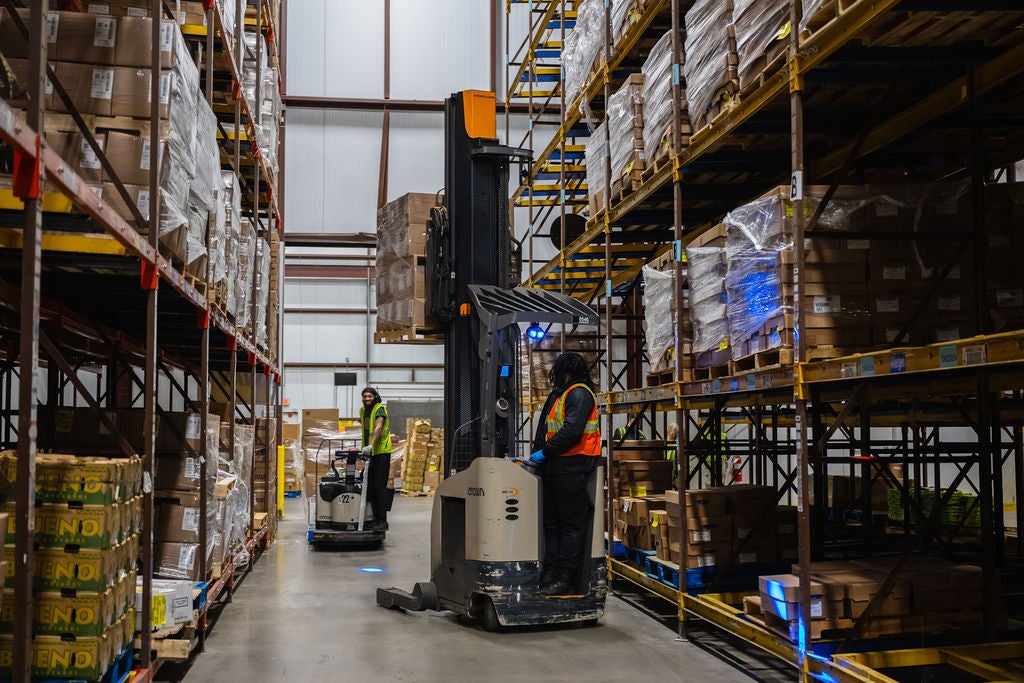
Foster cold storage facility in Winston-Salem NC with temperature-controlled pallet zones

As food brands and retailers grow, operational complexity increases, especially when managing perishable products. Great products alone are not enough to scale efficiently. Brands must maintain strict temperature controls, manage inventory overflow, support evolving operational demands, and meet rising customer expectations for fast delivery. This is where 3PL cold storage becomes a strategic advantage.

Partnering with an experienced cold storage logistics provider allows food brands to scale efficiently while minimizing risk, overhead, and operational strain. For companies throughout North Carolina, South Carolina, and the broader Southeast, outsourced refrigerated warehousing and frozen food logistics can provide the flexibility needed to support rapid growth without major capital investment.

When to Use Third-Party Warehousing

Lots of emerging and mid-sized food brands do their own warehousing in-house , even some bigger retailers still handle their own logistics. But as the orders start piling up, and the seasons start to fluctuate, supply chains change and labour gets harder to come by – that’s when the cracks in the system usually start to show. Your storage is getting cramped, bottlenecks in the warehouse are slowing down delivery and keeping food at the right temperature is turning into a nightmare – all of which can easily start bringing your bottom line down and making your customers unhappy.

If your team is too busy working on logistics and can’t get back to building the business, then maybe it’s time to start thinking about handing that part over to someone else.

Seasonal waves of demand are another big tipping point. Spending out on extra gear to cope with the ups and downs can be a real drag on the budget. Working with a 3PL that knows its stuff and can handle food grade storage, transportation and the like, means you can scale up and down as you need to – so whatever the demand, you’re never stuck with too much spare kit.

If you’re a food company in NC and SC, getting in with a local cold storage specialist can also help you get the last mile with your deliveries a lot faster – and save you from a lot of unnecessary hassle along the way

Reducing Capital Expenses

Building and operating refrigerated or frozen storage facilities requires substantial capital investment. Greenfield development projects or retrofitting existing facilities can take years to complete, while delays in capacity expansion can lead to lost sales, margin pressure, and cash flow challenges.

Beyond construction costs, cold storage operations require ongoing investments in:

  • Energy consumption
  • Food safety compliance
  • Warehouse management systems (WMS)
  • Specialized labor and training
  • Material handling equipment
  • Racking systems
  • Security and environmental monitoring
  • Grounds maintenance and fleet assets

Managing these fixed expenses internally can place significant financial pressure on a growing business.

By leveraging 3PL cold storage, brands can convert fixed operational costs into variable expenses. Instead of investing millions upfront, companies pay only for the space and services they actually use. This allows businesses to redirect capital toward higher-growth initiatives such as product development, marketing, and sales expansion.

Established cold storage logistics providers also bring existing infrastructure, certifications, trained staff, and operational expertise. This reduces onboarding time, lowers compliance risk, and improves overall efficiency.

With 124 years in business, an SQF-certified operation with an “Excellent” rating, USDA Good Manufacturing Practices (GMP) certification, and approximately 240,000 square feet of aggregate warehouse space representing nearly 20,000 pallet positions, experienced providers can deliver the scalability and operational stability growing food brands require. These certifications demonstrate a commitment to food safety, regulatory compliance, and operational excellence — all critical factors in temperature-controlled warehousing and refrigerated fulfillment operations.

While throughput requirements vary significantly depending on the program — ranging from pallet in/out operations to high-volume case picking — seasoned warehouse teams consistently provide greater accuracy, productivity, and fulfillment reliability than newly developed in-house operations.

E-Commerce Fulfillment for Perishable Goods

The rise of direct-to-consumer (DTC) food brands has made reliable fulfillment more important than ever. Shipping perishable products introduces additional complexity because temperature integrity must be maintained from warehouse to customer delivery.

A modern food grade warehouse equipped with integrated fulfillment systems can help streamline the process. Many 3PL providers offer:

  • Real-time inventory tracking
  • Automated picking and packing
  • Insulated packaging solutions
  • Expedited shipping partnerships
  • Multi-location distribution networks
  • Refrigerated fulfillment capabilities for DTC orders

With the right cold storage logistics provider, food brands can confidently expand their e-commerce operations without sacrificing product quality or customer experience.

For brands operating throughout North Carolina and South Carolina, regional refrigerated warehousing can improve delivery timelines and support efficient last-mile distribution. On the transportation side, many providers also support freight movement across North America, helping brands scale nationally while maintaining cold chain integrity.

Real-World Examples of Scalable Cold Storage Solutions

Take for instance the case of a regional frozen meal manufacturer whose business boomed following the implementation of an online subscription service. At first, the firm used in-house resources such as a freezer facility for order fulfillment. However, as the volume grew, there were often issues associated with inaccurate stock levels and delayed deliveries.

Through working together with a 3PL cold storage service, the business slashed down order processing time by 40 percent and minimized stockouts. With access to several warehouse facilities across various locations, the company was able to ship orders faster throughout the nation.

The same applies to a dairy manufacturer that took advantage of food warehousing outsourcing to venture into new retail segments. Using the services of the 3PL, the business gained access to the major grocery chains without having to invest in costly cold chain logistics operations.

Scaling Smarter with the Right Partner

Growth in the food industry is not just about increasing production. It requires building a resilient, efficient, and scalable supply chain.

A reliable cold storage logistics provider does more than store products — they become an extension of your operations. Through 3PL cold storage solutions, food brands can reduce capital expenditures, improve fulfillment performance, increase operational flexibility, and scale with confidence.

Whether you are entering new markets, launching an e-commerce channel, or managing seasonal demand fluctuations, partnering with a trusted food grade warehouse can support long-term, sustainable growth.

From refrigerated warehousing and frozen food logistics to regional last-mile distribution throughout North Carolina and South Carolina and freight coverage across North America, the right logistics partner can help food brands scale smarter and operate more efficiently.

Contact us today to learn more about how our cold storage and food distribution solutions can support your growth.

How Modern Cold Storage Facilities Are Transforming Cold Food Distribution with Technology

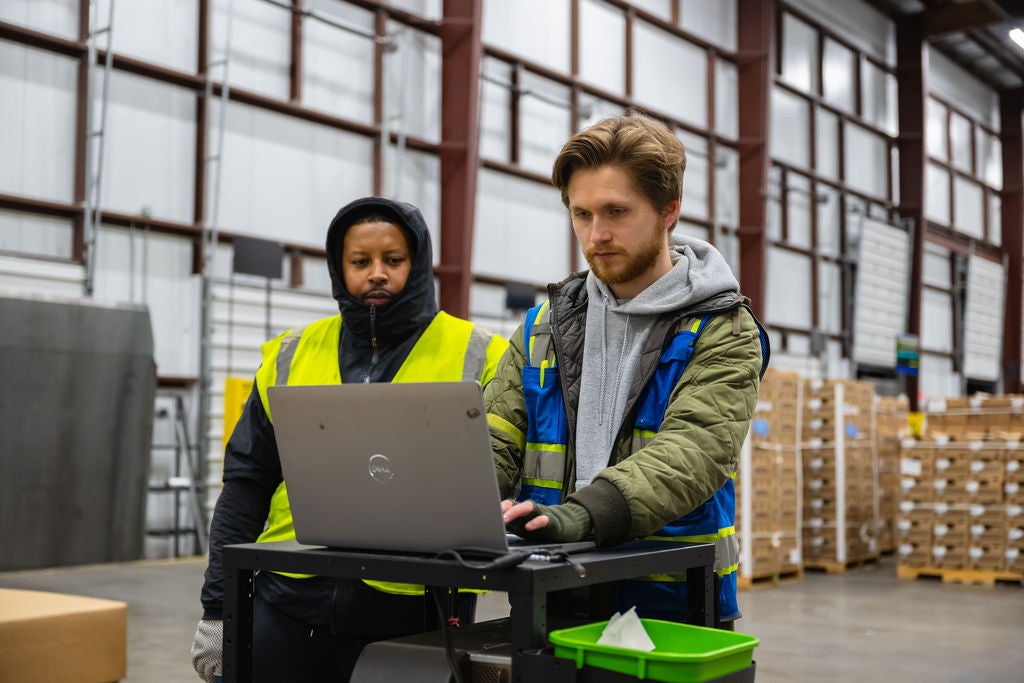
Men in a cold storage facility in Greensboro, NC on a laptop computer.

How we approach cold storage and cold food transportation has been radically transformed in recent years. What once appeared to be a relatively straightforward matter of storing products in cold conditions, we now understand is in fact a highly technical process requiring an extreme level of attention to detail and accuracy. In modern times, the driving force behind the best cold storage facilities comes down to three key components: innovation, flexibility, and people. We stay ahead of the curve by accommodating ever-growing consumer demands, designing custom solutions that are consistently executable, in a pro-people environment.

Behind the right assets and powerful technology are the workers who bring it all together. It is our staff who ensure technology translates into effective service delivery. It is their hard work with smart tools that allows us to offer more fresh produce, more frozen consumables, and more food — with shorter chains and less complexity of storage, handling, and distribution.

Consistent Cold Food Distribution

Automation and smart systems now play a huge role in reducing manual handling and minimizing temperature fluctuations. When paired with a strong Warehouse Management System (WMS), barcode scanning, and RF tracking, we get full traceability and much faster order fulfillment with far less risk of spoilage. The days of selecting orders with a paper pick sheet have been replaced by Vocollect-driven double pallet jack riding high-speed selectors pulling over 275 cases per man hour — with consistency north of 99.97% at those speeds, something we could have never imagined before this technology.

It’s a symbiotic marriage of people and technology that alerts us to potential risk and then delivers the solution to mitigate that risk, which means more food reaching the consumer and less ending up in the shrink pile.

In perishables, it has to be done right the first time, and right every time. There is no margin for error.

Temperature Monitoring System for Cold Food Storage

Maintaining proper temperature has always been vital, but now we have IoT-enabled sensors that allow us to track temperature throughout the facility on a minute-to-minute basis. Any slight deviation triggers an alarm, and we are able to take immediate action to prevent any adverse consequences.

Moreover, these systems enable us to engage in predictive maintenance and reduce equipment downtime.

The same technology exists on our fleet as well. Every truck, every trailer, every pallet position — we have complete transparency into all relevant environmental factors so we can make real-time decisions that result in the avoidance of millions of dollars of waste.

Air Quality Is Vital: Ionizers and Ethylene Scrubbers

One of the most significant, yet largely overlooked, innovations in contemporary cold storage technology is air purification. In all of our cold storage facilities, we install Miatech ionizers and ethylene scrubbers, which work continuously to remove ethylene gas, spores, mold, bacteria, and other airborne impurities from the air.

What makes them especially effective is that they work without chemicals, helping extend shelf life naturally while maintaining the flavor, texture, and nutritional value of fresh produce. Our teams have seen firsthand how these scrubbers reduce shrink and give our customers a more consistent, higher-quality product week after week. It’s a perfect example of technology quietly supporting the people who handle the food every day.

Produce begins to deteriorate the moment it is harvested and has a long journey from the field to the fork. This technology is another way we partner to ensure we are adding value to the cold chain, and to humanity at large.

Technologies That Ensure Freshness for Cold Food Distribution

We are now starting to witness how AI is becoming an important tool in cold storage — for predictive inventory forecasting as well as optimization of storage layout based on real-time data analysis. Together with our procurement and logistics expertise, these innovative technologies enable us to make better decisions and keep products flowing.

If you are in this business, you understand that dreaded moment when a customer calls and asks “do you have space for X?” and your operational leader says “we are out of space, can we get storage trailers?” With the advent of AI-powered intelligence, those days are over. Now, AI directs our teams in real time on how to better utilize our space, maximizing capacity — which not only brings down costs, but also allows us to get to that critical “yes” for our customers. The operations leader wasn’t wrong; they just couldn’t see what AI sees, didn’t have time to take out a tape measure and determine there were 6 inches of dead space in every pallet position, and that by moving cross beams we could add another 3 feet of storage height. But AI doesn’t necessarily understand that a particular item comes from multiple suppliers with different ti/hi pallet configurations, so while it may fit today, it won’t tomorrow. Again, it is that marriage between people and technology that creates highly efficient, almost bionic output — allowing for true optimization.

Flexibility Is Key

Beyond new technologies, while all of the above is critical, it is flexibility that matters most of all. Trucks don’t break down at the most inopportune times. New orders don’t come in when you happen to have lots of space. Construction on your refrigerated facility doesn’t get completed as quickly as it once did. The reality is, stuff happens, and the right partners adapt. Most cold storage companies tend to operate on strict schedules and minimums and do not have flexible procedures that are consistently executable. We designed our business to stand in that gap. That’s why we say “we’ve got the middle.” At Foster, we own the responsibility to adapt when you need us to. We respond to unforeseen issues and don’t turn the lights out at 5 PM. We uniquely understand that time is money, and the clock is ticking. We also don’t throw food safety, protocols, and procedures out the window every time a customer has a crisis. To the contrary, we design those things to embrace the crisis, account for the unknown, and still work when something else has gone wrong.

It’s not too dissimilar from a commercial flight: while the autopilot is designed to run smoothly, it accounts for winds blowing in different directions and can compensate for those variances in real time. So can our technology. If you’re like me, you still want a highly trained, experienced, competent pilot in the chair making decisions when technology can’t. Think of an F1 race car — amazing technology, but it doesn’t win races without a stellar pit crew and driver. At Foster, it is your passengers on that plane, your logo on that race car — our pilots and pit crews, with the right technology to get products safely to their final destination, to cross the finish line faster than anyone else, so that ultimately, you win.

People. Food. Together

Contact us to learn more.

Foster USA and Forsyth Tech Launch $256,000 Workforce Training Initiative to Support Local Expansion

WINSTON-SALEM, NC — Following a successful expansion into Winston-Salem in 2025, Foster USA is proud to announce the next phase of their commitment to Forsyth County: a comprehensive workforce training and development initiative launched in formal partnership with Forsyth Technical Community College.

This $256,305 program—supported by the NC Edge Customized Training Program—is designed to upskill existing workforce and integrate new talent as Foster continues to lay deep roots in the region. With Forsyth Tech as their primary educational partner, Foster’s employees will have access to world-class instruction, right in their new home town of Winston-Salem.

Investing in Their Greatest Asset: People

At Foster USA, people come first. Company growth is driven by the expertise of the employees under their roof. This initiative focuses on high-level retention and professional development for Foster’s 235 incumbent workers, while providing a robust onboarding pipeline for the 35 to 58 new full-time positions that will be created over the next three years.

“We aren’t just investing in a facility; we are investing in the people of Forsyth County,” said a spokesperson for Foster USA. “Partnering with Forsyth Tech allows us to provide our team with the specialized skills necessary to lead the fresh produce distribution industry while offering high-quality careers with average annual salaries exceeding $63,000”.

A Specialized Curriculum for Growth

Through this partnership, Forsyth Tech will deliver a customized curriculum tailored to Foster’s specific operational needs. Key pillars of the training include:

  • Leadership Development: Multi-level “Leadership Toolkits” and change management training for 80 of Foster’s emerging and current leaders.
  • Safety & Technical Excellence: Advanced certifications in OSHA 30, CPR/First Aid, and technical OJT (On-the-Job Training).
  • Industry-Leading Compliance: Specialized training in Good Manufacturing Practices (GMP) and Preventative Controls for Food Safety to ensure Foster’s supply chain solutions remain world-class.

To support Foster’s employees’ work-life balance and professional growth, all training sessions are conducted on-the-clock and fully compensated.

Building a Sustainable Future in Winston-Salem

This initiative is the culmination of the vision established during Foster’s initial “Project Kohlrabi” expansion. By leveraging the $6.25 million capital investment Foster made in their new Winston-Salem cold-storage and distribution hub, and combining it with Forsyth Tech’s educational expertise, Foster is building a sustainable economic engine for North Carolina..

Foster would like to thank the North Carolina Community College System and the North Carolina General Assembly for providing the customized training funds that make this partnership possible. Together with Forsyth Tech, Foster is proud to build a place of promise and opportunity in Winston-Salem.

In parallel, Foster is actively engaged in discussions with state and local leaders to expand and house additional workforce training and reskilling programs in North Carolina. These efforts are designed to strengthen the state’s talent pipeline, align training with the evolving needs of employers, and help position North Carolina as a national leader in workforce development and economic competitiveness.

What to Look For in a Cold Storage Facility for Fresh Food Distribution

Paper logo

Choosing a partner for temperature-controlled warehousing touches every metric that matters: product quality, speed to shelf, and total cost-to-serve. For teams evaluating a cold storage facility for fresh food distribution, the signal is clear—prioritize precise temperature management, proven food safety, and logistics that move at your market’s pace.

At Foster, we believe a cold storage should be a calibrated environment, not just a refrigerated box. Below is a breakdown of what sets our flexible, premium operation apart from other standard “commodity” warehouses.

Precision Environments: 10 Distinct Temperature Zones

Standard facilities often co-mingle products, but different commodities require specific, tight tolerances to slow respiration and extend shelf life. Foster maintains 10 distinct temperature zones to match your specific commodity profiles:

  • Refrigerated: Precision-zoned for various produce types, dairy, and ready-to-eat items.
  • Frozen: Ideal for all frozen goods, including proteins (meats/seafood), produce, and prepared meals or ingredients.
  • Ambient: Optimized for dry consumables, paper and plastics, packaging, and kitchenware.
  • Convertible Flexibility: Our 170,000 sq. ft. Winston-Salem HQ and regional hubs offer convertible refrigerated, frozen, or dry space to align with seasonal SKU shifts.

Advanced Air Quality & Smart Airflow

We treat the air itself as a tool for preservation. To eliminate “temperature spotting” and layering, we utilize smart anti-stratification technology to ensure consistent conditions from floor to ceiling.

Beyond cooling, our facilities utilize advanced air ionization and bacterial scrubbing. This 24/7, chemical-free process continuously neutralizes bacteria, mold, odors, and ethylene gas. For our partners, this delivers:

  • Extended Shelf Life: Dramatically reduced spoilage and fewer inventory losses.
  • Improved Food Safety: Continuous purification that targets pathogens without added labor.
  • Lower Costs: Reduced energy bills through more efficient refrigeration.

This process cuts product spoilage by 15–30% while extending shelf life and reducing energy costs for our customers. 

The Ripening Advantage: Retail-Ready Precision

One of the most critical “value-adds” in our cold chain is the ability to manage product maturity. Foster offers specialized ripening services designed to bring fruit to the perfect stage for retail or food service.

By utilizing atmospheric controls and expert oversight, we ensure your produce reaches the shelf at peak quality. This “one-roof” approach—combining storage with ripening—eliminates extra transport legs, reduces bruising from over-handling, and ensures your product is ready to go, when you need it.

People and Performance: Specialized Food Handling

The human element is a major differentiator. Our team brings hundreds of years of combined food handling experience, ensuring every product is managed with precision. With a legacy of 125 years as a dependable link in the supply chain, we provide high-touch oversight that the average operator cannot match. This includes the specialized ability to inspect, rework, and recondition products to ensure they meet retail standards.

Infrastructure Efficiency: Cross-Docking and Secure

Our facilities are engineered to remove unnecessary expense from the system:

  • Cross-Docking Efficiency: Our warehouse leverages cross-dock lanes to limit dwell, and insulated staging to maintain integrity during transfers. Helping to prevent shrink and recall risk for our customers. 
  • Secure Loading: Dock shelters and seals, separate refrigerated and ambient docks. Automatic dock levelers and integrated stop/go controls allow for safer, more efficient loading while helping minimize product damage.
  • Regional Powerhouse: Strategically located near major corridors (I-40, I-77, I-285) and major airports like PTI (24 mins), CLT (1.5 hrs), and RDU (1.5 hrs) to slash transit times.

Compliance and Visibility

Food safety is our foundation. Foster maintains rigorous adherence to FSMA and CGMP principles. Our facilities are SQF Certified, USDA Certified, and Organic Certified to provide assurance for sensitive product lines.

Inventory control is powered by a robust WMS that delivers 100% inventory accuracy for many customers, ensuring absolute visibility, enforced FIFO, and full lot traceability. All monitoring is cloud-based and digital, providing real-time data both in the building and on the truck.

How Foster Compares

When choosing a partner, use this table to see the difference between a standard operator and the Foster standard.

FeatureStandard Cold StorageThe Foster Advantage
Air QualityBasic VentilationIonization & Bacterial Scrubbing ✅
Ripening ServicesNone (Storage Only)Expert Ripening for Retail Readiness ✅
Temperature ConsistencyPotential “Hot Spots”Smart Anti-Stratification Airflow ✅
Handling ExpertiseGeneral Labor125 Years of Food Handling History ✅
Value-Added ServicesStorage OnlyExpert Inspection, Repacking, & Ripening ✅
Vertical EfficiencyStandard Heights44’ Clear Height (Lower System Costs) ✅
Safety TechManual DocksAutomatic Levelers & Stop/Go Controls ✅
MonitoringPaper / Manual Logs24/7 Cloud-Based Digital Tracking ✅
CertificationsBasic FDASQF, USDA, & Organic Certified ✅
Inventory IntegrityStandard Errors99.9% Accuracy via Robust WMS ✅

Why Partner with Foster

Foster partners with fresh food suppliers to deliver measurable results—such as our “one-roof” approach that helped one center reduce product shrink by 87%. We combine industry-leading technology with a 125-year legacy of dependability to protect your product and your bottom line.

We’ve got the middle, and your back. Contact us today to learn more.

Westfalia Fruit Opens New Fresh Distribution and Ripening Center in Winston-Salem, NC, Expanding Eastern Seaboard Operations

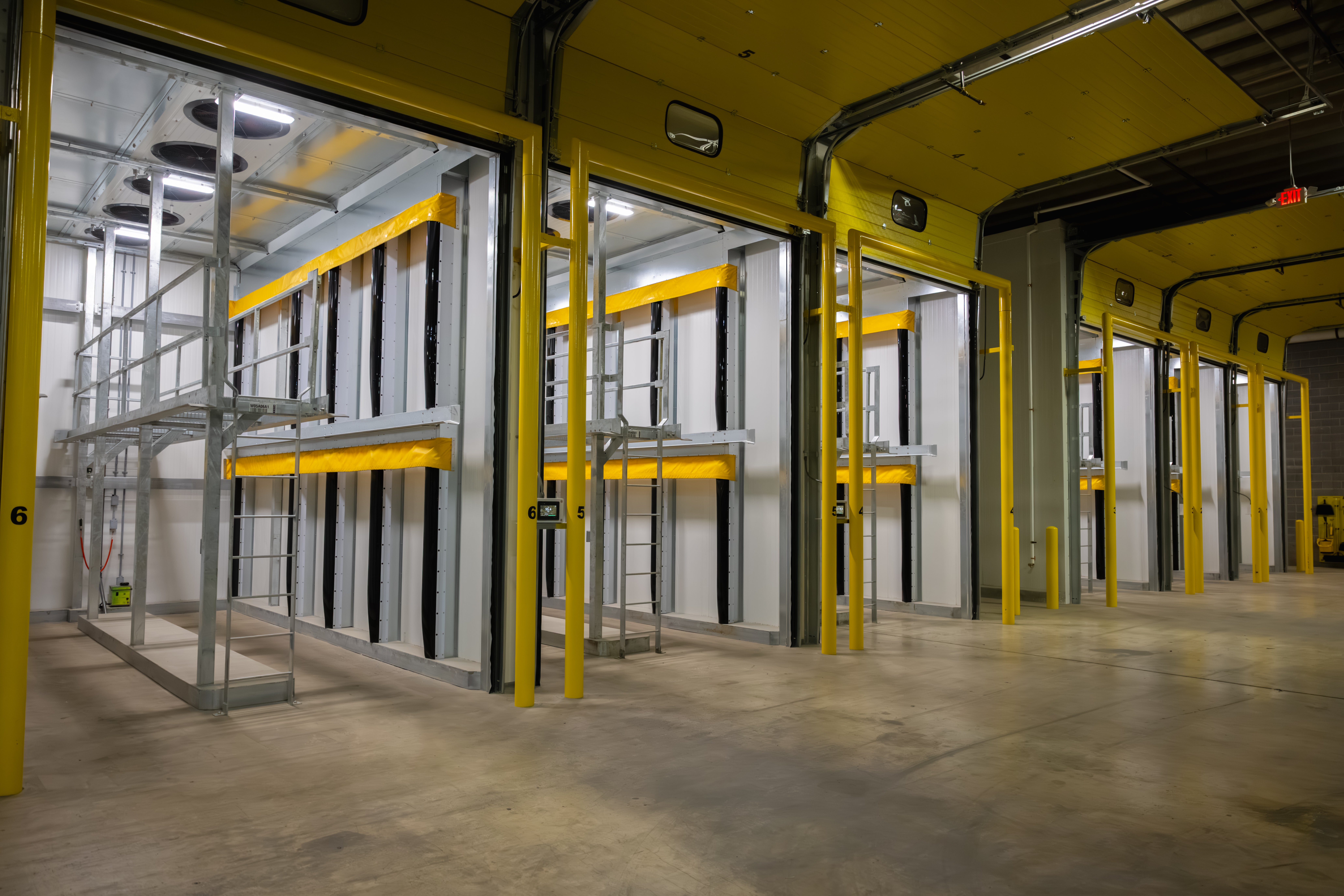
Blueberries ripening at Foster, a food ripening center and cold storage facility.

WINSTON-SALEM, NC – Westfalia Fruit, a global leader in avocado production, food ripening center, and distribution, announced the opening of its newest Fresh Distribution and Ripening Center (FDC) in Winston-Salem, North Carolina. The strategic expansion, developed in partnership with Foster USA, strengthens Westfalia Fruit’s presence along the Eastern Seaboard while enhancing access to ripe-and-ready avocado programs across the Mid-Atlantic region.

The new Winston-Salem FDC features Westfalia Fruit’s state-of-art avocado ripening rooms equipped with advanced, digitally controlled technology to deliver consistent, customer-specific ripeness. The facility also includes sophisticated storage and packing capabilities, designed to reinforce Westfalia Fruit’s forward-distribution model and ensure faster, fresher deliveries to retail and foodservice customers.

MEETING RISING DEMAND WITH LOCALIZED RIPENING EXPERTISE

With avocado consumption continuing to grow across the Mid-Atlantic, Westfalia Fruit’s expansion directly addresses evolving customer needs for speed to market, quality fruit, and supply chain efficiency. Strategically located near major Mid-Atlantic transport corridors, the Winston-Salem facility enables shorter transit times, reduced carbon footprint, and improved freshness for customers throughout the region.

“Our partnership with Foster USA allows us to meet customers where they are,” said Raina Nelson, President of Westfalia Fruit North America, in the recent release. “The Mid-Atlantic is one of the fastest growing produce markets in the U.S., and this new facility positions our avocado expertise closer to customers — enhancing consistency, service levels, and overall performance.”

A PARTNERSHIP BUILT ON FRESH FOOD EXCELLENCE

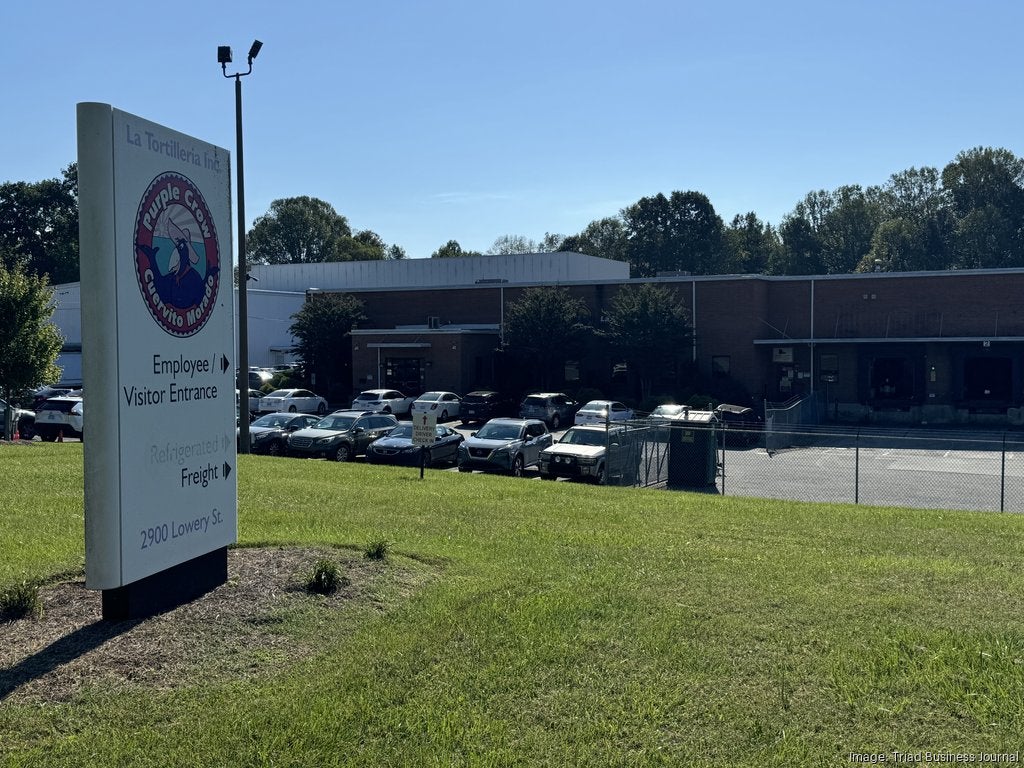
Based in Winston Salem, North Carolina, Foster USA is a fresh-food full-service logistics company proudly serving the Mid-Atlantic for over 120 years. The company recently expanded into Winston Salem with a 170,000-square-foot facility on Lowery Street, which includes advanced cold storage, ripening, packaging, and fresh-cut capabilities — supported by its vertically integrated Foster360 supply chain system.

“We are proud to partner with Westfalia Fruit on this exciting expansion,” said Scott Bland, CEO and Owner of Foster USA. “Together, we’re improving access to ripe-and-ready avocados for Mid Atlantic customers while setting a new standard for produce distribution and supply chain innovation in the region.”

DRIVING GROWTH AND EDUCATION ACROSS THE SUPPLY CHAIN

Beyond distribution, the Winston-Salem facility will also serve as a hub for ripening education and customer collaboration, hosting programs that promote category growth, tailored retailer promotions, and best-in-class ripening practices. These initiatives reflect Westfalia Fruit’s commitment to industry leadership, sustainability, and long-term category development.

How Proper Cold Chain Management Protects Fresh Produce from Farm to Retail

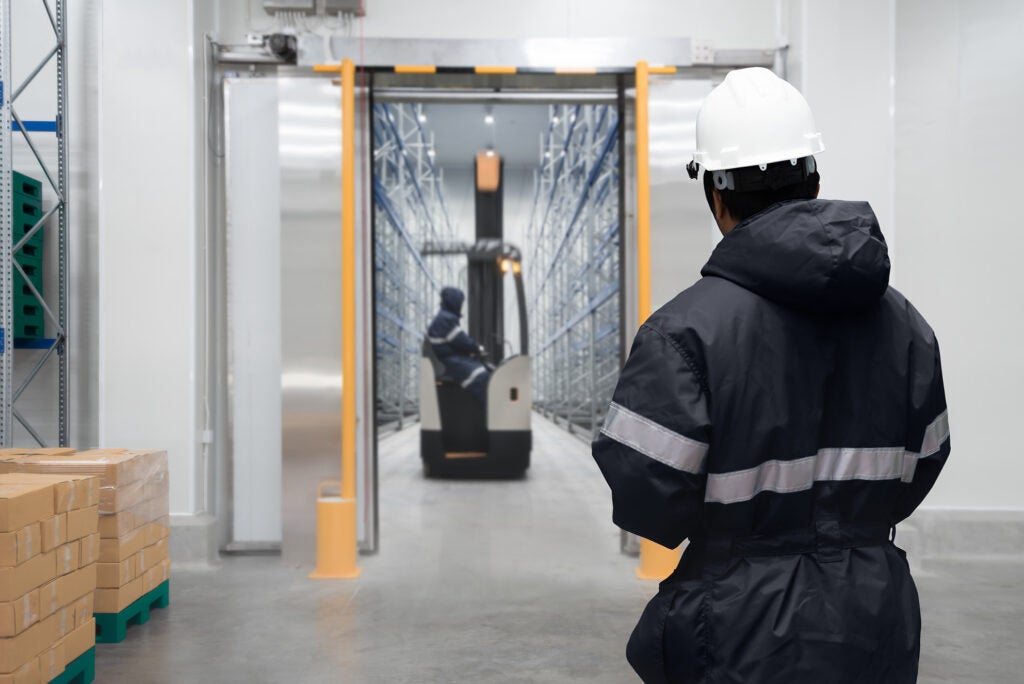
Men working in cold storage warehouse in Winston Salem, NC.

Fresh fruits and vegetables don’t wait. Biological processes start as soon as they are harvested, which can quickly reduce quality, shorten shelf life, and raise concerns about food safety.

For this reason, one of the most important systems for storing and distributing fresh goods is cold chain management. At 211 degrees it’s hot water, but at 212 degrees it’s a boiling whirlwind of kinetic energy and atomic level explosions—in the cold chain, just as in physics, 1 degree matters.

From the farm to the store shelf, cold chain management, when done correctly, maintains food safety, minimizes shrink, stops spoiling, and maintains product integrity.

Losses quickly multiply when it fails.

At Foster, from the first mile to the last: We’ve got the middle. Let’s dig in. 

Cold chain management: what is it?

The end-to-end regulation of temperature, humidity, handling, and monitoring for perishable goods during transit and storage is known as cold chain management.

For fresh produce, this includes:

  • Temperature-controlled warehousing
  • Refrigerated logistics and transport
  • Cross-docking and redistribution
  • Ripening and inventory integrity

Each step must maintain precise environmental control. Even minor temperature deviations can significantly impact product life expectancy. Consider this: for every hour produce is not in its preferred temperature, you lose a day of shelf life. We often tell prospects, “No problem, take 300 minutes to consider it and call us back.” When they ask why exactly 300 minutes, the answer is simple: that’s how long it takes before you lose the rest of the week in shelf life.


What Breaks the Cold Chain?

Cold chain failures often happen in small, overlooked moments. Common breakdown points include:

1. Improper Dock Management

Open dock doors, staging delays, and warm loading areas create temperature spikes.

2. Uncalibrated Refrigerated Trailers

Reefer units not properly pre-cooled or maintained can compromise entire shipments.

3. Poor Airflow in Storage

Overstacked pallets or blocked vents reduce circulation and create hot spots.

4. Lack of Monitoring

Without real-time tracking, temperature excursions may go unnoticed until spoilage appears.

These small breaks compound over time, leading to higher shrink, shorter shelf life, and increased food safety risk.


Refrigerated Logistics: Where Control Is Often Lost

Transportation remains one of the highest-risk points in the supply chain.

Effective refrigerated logistics require:

  • Pre-cooled trailers before loading
  • Rapid load times to limit exposure
  • Proper pallet spacing for airflow
  • Verified trailer temperature settings
  • Ongoing reefer monitoring during transit

Our temperature-controlled fleet of over 150 assets (36’/48’/53’) utilizes FTL/LTL and Samsara-powered real-time visibility—providing GPS breadcrumb trails, geofencing, and total environmental control to optimize both transport and safety.

Cross-docking strategies further reduce dwell time, keeping product moving efficiently through our facilities while preserving temperature integrity.

Cold chain management doesn’t stop at the warehouse door — it travels with every shipment.


Precision Climate Management: Protecting Your Bottom Line

In the cold storage supply chain, a two-degree deviation isn’t just a technical error—it’s a threat to your margins. At Foster, we manage the delicate biological requirements of every commodity to maximize shelf life and ensure plate-ready quality.

Ideal Temperature Ranges by Product Type

Different commodities require different storage conditions. Proper fresh produce storage depends on understanding these variations.

Leafy Greens (Lettuce, Spinach, Kale): 

  • Maintained at 32–36°F
  • With 95%+ humidity
  • Prevents wilting and maintains the “crunch” your customers expect

Berries (Strawberries, Blueberries, Raspberries) & Stone Fruits

  • Rapid pre-cooling to 32–34°F
  • Halts respiration and prevents mold-driven shrink
  • Extends shelf life

Tomatoes/Citrus

  • Specialized zones (up to 60°F)
  • Prevents “chilling injury,” ensures flavor integrity and juice content aren’t compromised by improper cold-shock

Maintaining these temperature ranges consistently is fundamental to both product quality and food safety in cold storage. Once received, products are housed across our 10 precise temperature zones in SQF and USDA certified facilities. Our facilities also utilize advanced ionization and air-scrubbing systems to ensure maximum product longevity.

We adhere to regulatory guidance from the Food and Drug Administration and the USDA which reinforce strict environmental controls to prevent contamination and bacterial growth.

Precision Ripening: Engineering the “Perfect Peak”

In a high-volume supply chain, “ripeness” isn’t a suggestion—it’s a metric. Foster’s state-of-the art ripening program transforms volatile produce into predictable, shelf-ready assets. By utilizing custom-commissioned ripening rooms, we move beyond simple storage into active product management.

Why Our Precision Climate and Ripening Infrastructure Wins:

  • Ethylene Management & Air-Scubbing: We don’t just “wait” for fruit to ripen. Our facilities utilize advanced ionization and air-scrubbing to manage ethylene levels—the natural hormone responsible for aging. This allows us to either “stall” the process to extend shelf life or “trigger” it for just-in-time delivery.
  • 10 Precise Temperature Zones: Different products reach peak flavor at different thermal thresholds. Our SQF-certified zones ensure that sensitive items (like tomatoes) never hit the “chilling injury” zone, preserving internal texture and sugar content.
  • Consistency at Scale: Our on-site quality team allows us to monitor the internal pressure and Brix levels (sugar content) of the product throughout the cycle. This ensures that whether you are mashing, slicing, or dicing, the yield remains consistent across every case.

Monitoring and Item-Level, Real-Time Tracking: The Backbone of Modern Cold Chain Management

Technology has transformed refrigerated logistics. Our advanced cold storage monitoring and item-level solutions implement:

  • Proactive PO Management: Digitized purchase orders that provide visibility from order creation through final delivery.
  • Complete Item-Level Visibility: Continuous tracking of individual items or SKUs across the supply chain, with insights into temperature logging, inventory status, and location.
  • Proactive Inventory Optimization: On demand inventory planning and management using predictive tools, automated replenishment, and redistribution strategies to improve fill rates and avoid stockouts.  
  • Real-Time Visibility: Complete inbound and outbound visibility through custom, SKU-based alerts. 

As a must-have layer of control, if a refrigeration unit fails or a temperature threshold is exceeded, alerts are triggered immediately — allowing corrective action before product loss occurs.

This proactive monitoring:

  • Reduces liability
  • Supports audit readiness
  • Strengthens compliance documentation
  • Protects inventory value

Real-time data also provides traceability, which is increasingly critical in meeting food safety regulations and retailer requirements. It allows us to consistently exceed 99.5% fill rates with over 5 million refrigerated/frozen/temperature-controlled cases delivered on time last year.

Paired with our Warehouse Management System (WMS), customers often experience 100% inventory accuracy, ensuring your stock levels are always precise, reliable, and on time.


Reducing Shrink and Spoilage Through Cold Chain Discipline

Shrink is one of the most expensive challenges in produce distribution.

Proper cold chain management reduces shrink by:

  • Slowing respiration rates
  • Minimizing moisture loss
  • Preventing mold growth
  • Reducing microbial activity
  • Preserving structural integrity

Even a 5–10% reduction in spoilage can dramatically improve profit margins across high-volume produce operations. 

When cold storage supply chain discipline is maintained:

  • Retailers experience fewer rejections
  • Shelf life is extended
  • Customer satisfaction improves
  • Waste disposal costs decline

The financial impact is measurable — and significant.

Case study on 87% Reduction in Product Shrink: A high-volume distribution center handling nearly 1.5M cases annually reduced shrink from 1.65% to just 0.22% after implementing our one-roof approach—driving measurable improvements in freshness, efficiency, and profitability.


Why Our Cold Storage Supply Chain Works

Strong cold chain management works because it controls variables.

When temperature, humidity, monitoring, and handling are standardized:

  • Biological degradation slows
  • Food safety risks decrease
  • Shelf life extends
  • Shrink is minimized
  • Compliance risk is reduced

It transforms reactive problem-solving into proactive risk prevention.

For operations focused on fresh produce storage and distribution we are more than a supply chain provider; we are a dedicated partner committed to purposeful collaboration. 

While our technology is world-class, our greatest innovation is our flexibility. We don’t force your business into a pre-set mold; we make strategic choices to tailor our storage, ripening, and logistics to meet your unique operational needs. By mastering the “middle” under one roof, we provide the peace of mind that comes with 125 years of dependability. 


From the first mile to the last: We’ve got the middle.

One of the food supply chain’s most temperature-sensitive categories is fresh produce. Little inconsistencies have big effects.

  • Our agile cold chain solution ensures:
    • Cold storage food safety
    • <1% Shrink 
    • 99.2% Fill Rate
    • 125 years of dependable refrigeration logistics & product quality


At Foster, we combine the agility of a “one-roof” solution with a level of trust that spans from the federal government and schools to global leaders like Chipotle and exclusive growers. We deliver a leaner, smarter supply chain that the industry’s most demanding operators rely on every day.

Choose a partner that values innovation and adapts to your vision. From the first mile to the last: We’ve got the middle.

Available to you today: 

  • 20,000+ pallet positions.
  • 87,404 sq ft of cooler space.
  • 41,647 sq ft of freezer space.
  • 6 ripening rooms (with 6 more in progress).

Our regional network:

  • Winston-Salem HQ: 10 temp zones | 170,000 sq ft convertible refrigerated or frozen.
  • Colfax, NC: 6 temp zones | 32,000+ sq ft convertible dry or refrigerated.
  • Greenville, NC: 6 temp zones | 10,500+ sq ft convertible dry or refrigerated. Charlotte, NC: 4 temp zones | 17,000+ sq ft convertible dry or refrigerated.
  • Service Hubs: Also serving Myrtle Beach.

Let’s talk.

Welcome to our new CFO: Drew Davis

food distribution and supply transportation

November 6, 2024 – Foster has added financial guru Drew Davis to its team
as Chief Financial Officer. Throughout his 11 years in the financial industry, Davis has gained extensive knowledge to develop and grow strong, financial relationships and looks forward to carrying out the Foster vision of “Being THE supply chain solution between people and their food.”

See the full News Release by clicking here.