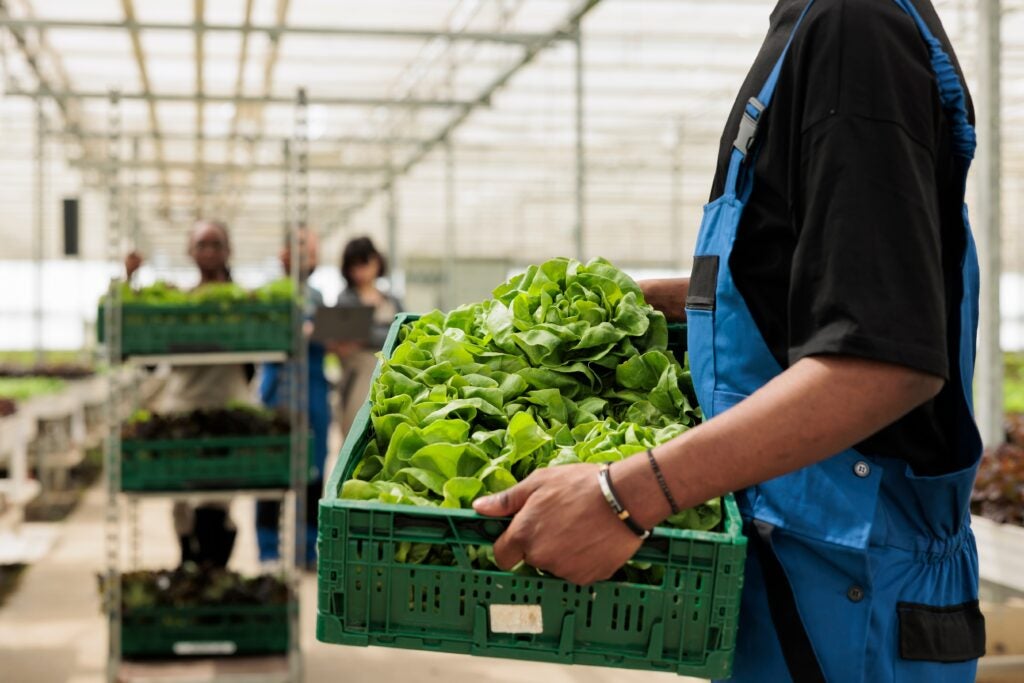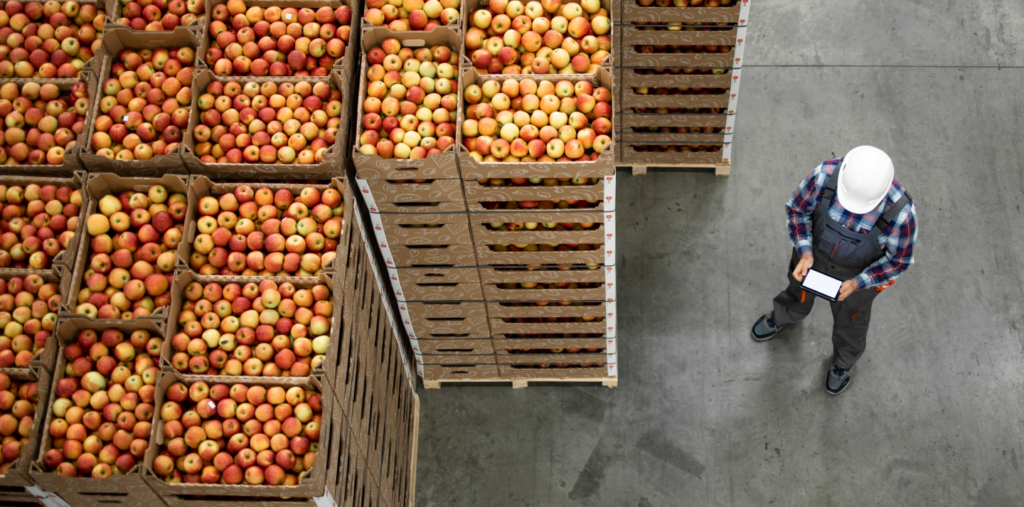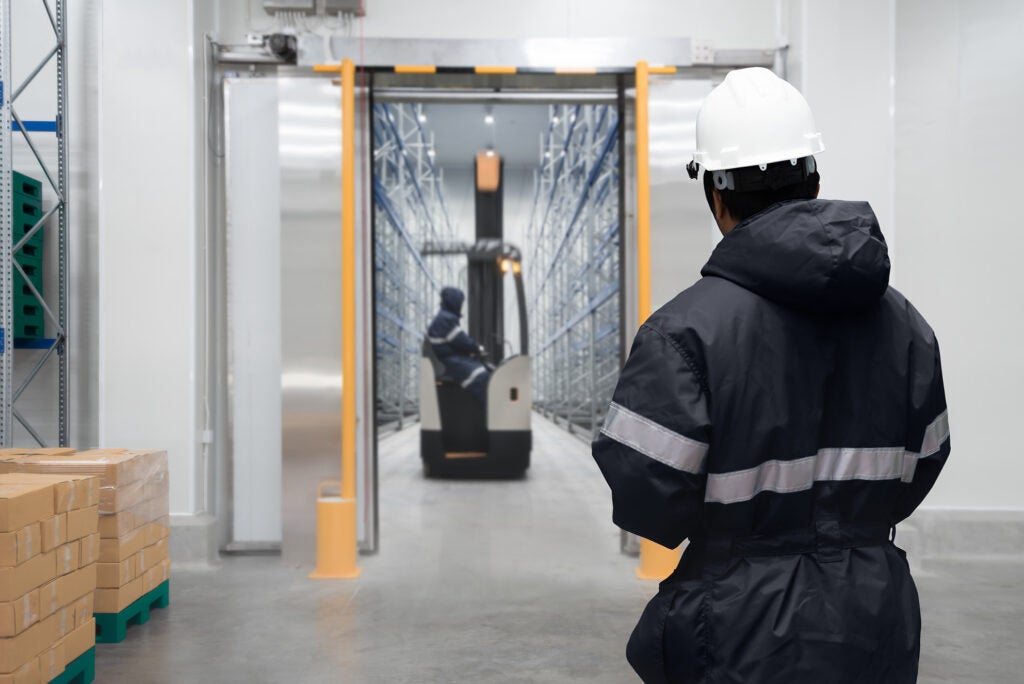
Fresh fruits and vegetables don’t wait. Biological processes start as soon as they are harvested, which can quickly reduce quality, shorten shelf life, and raise concerns about food safety.
For this reason, one of the most important systems for storing and distributing fresh goods is cold chain management. At 211 degrees it’s hot water, but at 212 degrees it’s a boiling whirlwind of kinetic energy and atomic level explosions—in the cold chain, just as in physics, 1 degree matters.
From the farm to the store shelf, cold chain management, when done correctly, maintains food safety, minimizes shrink, stops spoiling, and maintains product integrity.
Losses quickly multiply when it fails.
At Foster, from the first mile to the last: We’ve got the middle. Let’s dig in.
Cold chain management: what is it?
The end-to-end regulation of temperature, humidity, handling, and monitoring for perishable goods during transit and storage is known as cold chain management.
For fresh produce, this includes:
- Temperature-controlled warehousing
- Refrigerated logistics and transport
- Cross-docking and redistribution
- Ripening and inventory integrity
Each step must maintain precise environmental control. Even minor temperature deviations can significantly impact product life expectancy. Consider this: for every hour produce is not in its preferred temperature, you lose a day of shelf life. We often tell prospects, “No problem, take 300 minutes to consider it and call us back.” When they ask why exactly 300 minutes, the answer is simple: that’s how long it takes before you lose the rest of the week in shelf life.
What Breaks the Cold Chain?
Cold chain failures often happen in small, overlooked moments. Common breakdown points include:
1. Improper Dock Management
Open dock doors, staging delays, and warm loading areas create temperature spikes.
2. Uncalibrated Refrigerated Trailers
Reefer units not properly pre-cooled or maintained can compromise entire shipments.
3. Poor Airflow in Storage
Overstacked pallets or blocked vents reduce circulation and create hot spots.
4. Lack of Monitoring
Without real-time tracking, temperature excursions may go unnoticed until spoilage appears.
These small breaks compound over time, leading to higher shrink, shorter shelf life, and increased food safety risk.
Refrigerated Logistics: Where Control Is Often Lost
Transportation remains one of the highest-risk points in the supply chain.
Effective refrigerated logistics require:
- Pre-cooled trailers before loading
- Rapid load times to limit exposure
- Proper pallet spacing for airflow
- Verified trailer temperature settings
- Ongoing reefer monitoring during transit
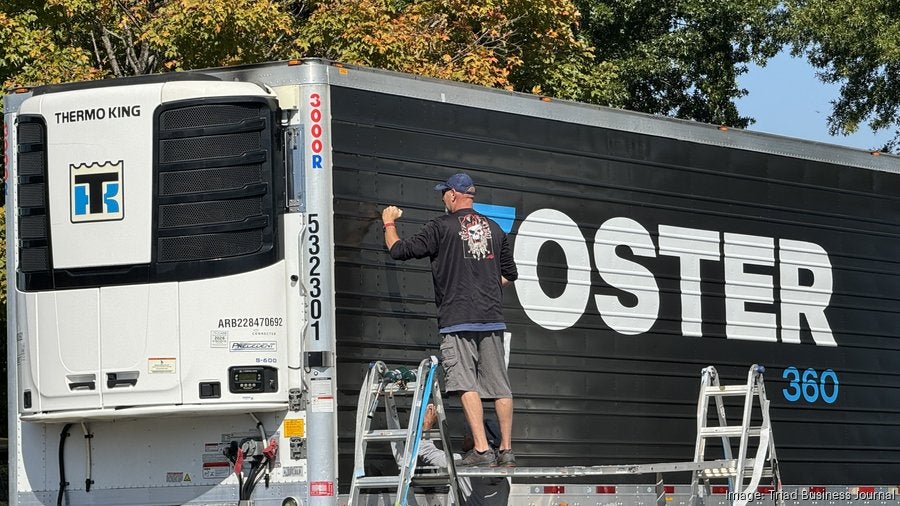
Our temperature-controlled fleet of over 150 assets (36’/48’/53’) utilizes FTL/LTL and Samsara-powered real-time visibility—providing GPS breadcrumb trails, geofencing, and total environmental control to optimize both transport and safety.
Cross-docking strategies further reduce dwell time, keeping product moving efficiently through our facilities while preserving temperature integrity.
Cold chain management doesn’t stop at the warehouse door — it travels with every shipment.
Precision Climate Management: Protecting Your Bottom Line
In the cold storage supply chain, a two-degree deviation isn’t just a technical error—it’s a threat to your margins. At Foster, we manage the delicate biological requirements of every commodity to maximize shelf life and ensure plate-ready quality.
Ideal Temperature Ranges by Product Type
Different commodities require different storage conditions. Proper fresh produce storage depends on understanding these variations.
Leafy Greens (Lettuce, Spinach, Kale):
- Maintained at 32–36°F
- With 95%+ humidity
- Prevents wilting and maintains the “crunch” your customers expect
Berries (Strawberries, Blueberries, Raspberries) & Stone Fruits
- Rapid pre-cooling to 32–34°F
- Halts respiration and prevents mold-driven shrink
- Extends shelf life
Tomatoes/Citrus
- Specialized zones (up to 60°F)
- Prevents “chilling injury,” ensures flavor integrity and juice content aren’t compromised by improper cold-shock
Maintaining these temperature ranges consistently is fundamental to both product quality and food safety in cold storage. Once received, products are housed across our 10 precise temperature zones in SQF and USDA certified facilities. Our facilities also utilize advanced ionization and air-scrubbing systems to ensure maximum product longevity.
We adhere to regulatory guidance from the Food and Drug Administration and the USDA which reinforce strict environmental controls to prevent contamination and bacterial growth.
Precision Ripening: Engineering the “Perfect Peak”
In a high-volume supply chain, “ripeness” isn’t a suggestion—it’s a metric. Foster’s state-of-the art ripening program transforms volatile produce into predictable, shelf-ready assets. By utilizing custom-commissioned ripening rooms, we move beyond simple storage into active product management.
Why Our Precision Climate and Ripening Infrastructure Wins:
- Ethylene Management & Air-Scubbing: We don’t just “wait” for fruit to ripen. Our facilities utilize advanced ionization and air-scrubbing to manage ethylene levels—the natural hormone responsible for aging. This allows us to either “stall” the process to extend shelf life or “trigger” it for just-in-time delivery.
- 10 Precise Temperature Zones: Different products reach peak flavor at different thermal thresholds. Our SQF-certified zones ensure that sensitive items (like tomatoes) never hit the “chilling injury” zone, preserving internal texture and sugar content.
- Consistency at Scale: Our on-site quality team allows us to monitor the internal pressure and Brix levels (sugar content) of the product throughout the cycle. This ensures that whether you are mashing, slicing, or dicing, the yield remains consistent across every case.
Monitoring and Item-Level, Real-Time Tracking: The Backbone of Modern Cold Chain Management
Technology has transformed refrigerated logistics. Our advanced cold storage monitoring and item-level solutions implement:
- Proactive PO Management: Digitized purchase orders that provide visibility from order creation through final delivery.
- Complete Item-Level Visibility: Continuous tracking of individual items or SKUs across the supply chain, with insights into temperature logging, inventory status, and location.
- Proactive Inventory Optimization: On demand inventory planning and management using predictive tools, automated replenishment, and redistribution strategies to improve fill rates and avoid stockouts.
- Real-Time Visibility: Complete inbound and outbound visibility through custom, SKU-based alerts.
As a must-have layer of control, if a refrigeration unit fails or a temperature threshold is exceeded, alerts are triggered immediately — allowing corrective action before product loss occurs.
This proactive monitoring:
- Reduces liability
- Supports audit readiness
- Strengthens compliance documentation
- Protects inventory value
Real-time data also provides traceability, which is increasingly critical in meeting food safety regulations and retailer requirements. It allows us to consistently exceed 99.5% fill rates with over 5 million refrigerated/frozen/temperature-controlled cases delivered on time last year.
Paired with our Warehouse Management System (WMS), customers often experience 100% inventory accuracy, ensuring your stock levels are always precise, reliable, and on time.
Reducing Shrink and Spoilage Through Cold Chain Discipline
Shrink is one of the most expensive challenges in produce distribution.
Proper cold chain management reduces shrink by:
- Slowing respiration rates
- Minimizing moisture loss
- Preventing mold growth
- Reducing microbial activity
- Preserving structural integrity
Even a 5–10% reduction in spoilage can dramatically improve profit margins across high-volume produce operations.
When cold storage supply chain discipline is maintained:
- Retailers experience fewer rejections
- Shelf life is extended
- Customer satisfaction improves
- Waste disposal costs decline
The financial impact is measurable — and significant.
Case study on 87% Reduction in Product Shrink: A high-volume distribution center handling nearly 1.5M cases annually reduced shrink from 1.65% to just 0.22% after implementing our one-roof approach—driving measurable improvements in freshness, efficiency, and profitability.
Why Our Cold Storage Supply Chain Works
Strong cold chain management works because it controls variables.
When temperature, humidity, monitoring, and handling are standardized:
- Biological degradation slows
- Food safety risks decrease
- Shelf life extends
- Shrink is minimized
- Compliance risk is reduced
It transforms reactive problem-solving into proactive risk prevention.
For operations focused on fresh produce storage and distribution we are more than a supply chain provider; we are a dedicated partner committed to purposeful collaboration.
While our technology is world-class, our greatest innovation is our flexibility. We don’t force your business into a pre-set mold; we make strategic choices to tailor our storage, ripening, and logistics to meet your unique operational needs. By mastering the “middle” under one roof, we provide the peace of mind that comes with 125 years of dependability.
From the first mile to the last: We’ve got the middle.
One of the food supply chain’s most temperature-sensitive categories is fresh produce. Little inconsistencies have big effects.
- Our agile cold chain solution ensures:
- Cold storage food safety
- <1% Shrink
- 99.2% Fill Rate
- 125 years of dependable refrigeration logistics & product quality
At Foster, we combine the agility of a “one-roof” solution with a level of trust that spans from the federal government and schools to global leaders like Chipotle and exclusive growers. We deliver a leaner, smarter supply chain that the industry’s most demanding operators rely on every day.
Choose a partner that values innovation and adapts to your vision. From the first mile to the last: We’ve got the middle.
Available to you today:
- 20,000+ pallet positions.
- 87,404 sq ft of cooler space.
- 41,647 sq ft of freezer space.
- 6 ripening rooms (with 6 more in progress).
Our regional network:
- Winston-Salem HQ: 10 temp zones | 170,000 sq ft convertible refrigerated or frozen.
- Colfax, NC: 6 temp zones | 32,000+ sq ft convertible dry or refrigerated.
- Greenville, NC: 6 temp zones | 10,500+ sq ft convertible dry or refrigerated. Charlotte, NC: 4 temp zones | 17,000+ sq ft convertible dry or refrigerated.
- Service Hubs: Also serving Myrtle Beach.
Let’s talk.